
A Rose in Buffalo: A Conversation with Poet Zaria Black
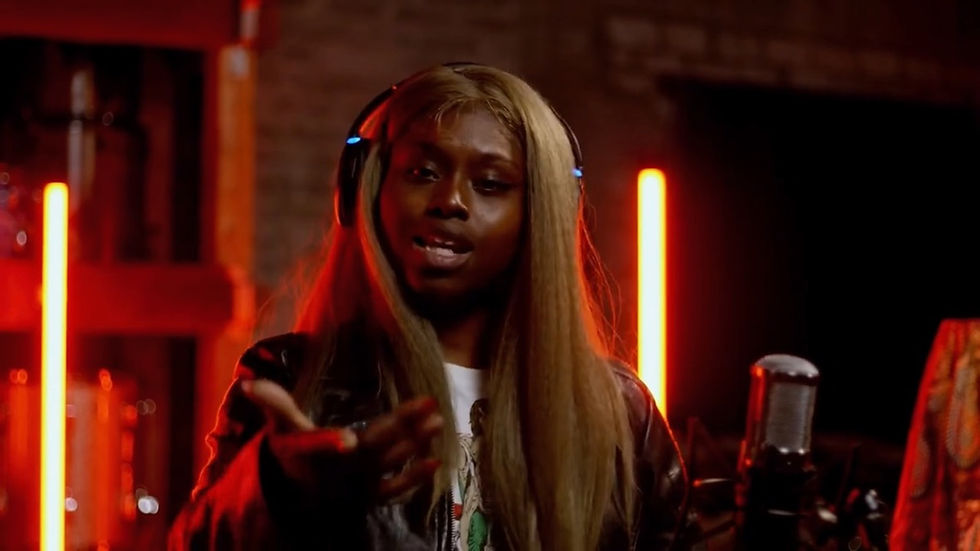
Zaria Black, known as “A Rose in Buffalo,” took the cue for her performance name from the work of legendary rapper and poet, Tupac Shakur, whose posthumous book of poetry was called “The Rose That Grew from Concrete.”
Shakur’s music was always a part of Zaria’s home, as was art and creativity, stemming from the example of her uncle who died early.
“We all liked to chill, have fun, good times,” she said. “So, a beat, food, some cards, a vibe, a time: it was a time to be had. That was just passed down to us. It’s like you had a favorite recipe, and let’s say it’s your mom’s recipe and she passes it down to your sister who then passed it to you. That’s how music was, that’s how creativity was, in my family.”
After being asked her first and last name, Zaria responded with a question her own: “Are you a cop?”
And perhaps she has good reason for that. In this political climate, even a poet might be a target, she said. And Buffalo is one of the nation’s most segregated cities in America. Halfway through the interview, various sirens passed by prompting her to laugh and say it was “a setup.”
Ultimately inspired to write by her sister, whose journals she sneaked as a child and then made some of her own, Zaria said her mother had her recite ‘Phenomenal Women’ by Maya Angelou in second grade. It was quite a feat. Everyone else had easy projects, she said, and from there she talked about mirroring Angelo in her own work, until she discovered Langston Hughes.
“So, I started off believing that, not only was I a phenomenal woman, duh, but that poetry had to be these long pieces, and that’s not how it had to be. It could be anything. It could be a word. It can be a sound,” she said. “When I came upon Langston Hughes, when he was talking about sugar hill and the girls in Harlem, I realized I don’t have to do long poems. I kind of switched a little bit.”
The focus of Zaria’s work centers around being Black in America, and especially Buffalo, the city in which she grew up. Compounded was her last name, “Black,” and it seemed inevitable to Zaria that she would express something about her experience.
Poetry is the medium of that expression.
“It was inescapable,” she said. “I always had a journal, my sister always had her journals, so I was taught early on that, ‘hey, this is my thing.’ If I didn’t have a journal, it was a painting, it was something.
“I was always very introverted. I was always doing things very much with me. That includes writing, that includes painting, that includes music, that includes history,” she added. “That is really what it was: Me trying to convey the message of history, in everything I taught myself, in a way where I felt like it resonated to someone else… And that was through poetry. That was through writing.”
The poetry scene in Buffalo was something Zaria found a decade ago while in high school. A performing poet now for about five years, Zaria talked about going to the Gypsy Parlor on Grant Street and watching veteran poets like Brandon Williamson, J.B. Stone, Bianca L. Period and Eve Williams. She loved the poetry and the style of the venue. She said it reminded of her great-grandmother’s home, who ran a speakeasy.
“The women in my family are really dope,” she said.

In terms of identity, Zaria said she enjoys being a poet, though not all the time. As she grew in her craft, being “the poet outwardly,” took away from being “just a girl who wrote.” The harder thing is just being something beautiful, she said, the rose that grew in the concrete. The Rose in Buffalo. Being talented but having to go through hell to let that talent show, she explained.
While that doesn’t stop her from having fun, she notes her poetry is about finding truth. Zaria talked about following news stories and rapping about them in a free style, which could be funny. Still, it was through the totality of her own experience that her most known piece, ‘Dear White Women,’ came out the way it did.
“It’s usually what I come across, usually the connections I make. Whatever I’m currently feeling. Usually, I come across a ton of news articles,” she explained. “A recent project I did called ‘Dear White Women,’ I came across that, because I just so happened to be reading ‘White Tears, Brown Scars,’ by Rudy Gilad Hamad. At the time, I was trying to make this connection with this indigenous guy because I wanted to make the social connection to the reservations, to indigenous folk. And I remember this white woman, passively, in the most passive aggressive and very slick way, divide and conquer,” she said.
It was a chance encounter, but it crystalized in her everything she’d experienced outside of her control, being Black, with a last name, “Black,” living in Buffalo.
“I don’t want to sound like I’m actively searching out things. When I write a poem, usually nine-times-out-of-ten my poems are not me searching to write the poem. Like ‘Dear White Women’ came from, again, I had this indigenous friend and I wanted to build that connection, this white woman got in the middle of it. I wrote it in literally less than 30 minutes.”
Zaria turned the poem into music and still feels it’s the most-strong poem she’s done. She said it seems to connect with everyone, white women included. It’s so relatable, Zaria said.
“Once I did (perform it), even white women acted like it was telling the truth, because it is the truth,” she said. “You can’t be offended by the truth.”
Check out the video below of Zaria performing ‘Dear White Women,’ and follow her YouTube channel @aroseinbuffalo. A larger piece of work from Zaria is upcoming and will be released as her first book called, ‘I’m Not Your Bitter Black Bitch.’


Comments