
The Sky is Bluer Now for Gatto Black’s Sal Mastrocola

(EDITOR’S NOTE — A year ago this month, Sal Mastrocola — the mastermind behind the hardcore-emo project Gatto Black — released an LP titled ‘Sky is Blue,’ an album that was far more than just a simple collection of songs. The seminal 11-track work was, in fact, the moment Sal Mastrocola quite literally came out to the world and in doing so, finally freed himself forever. For a kid from the Bronx who grew up in the Church, doing so was hardly simple. The struggle of confronting, and coming to terms with, his sexuality was one that caused so much pain and confusion, it nearly claimed his life. For almost a year now, Sal Mastrocola has lived free of the burden that once became so heavy it threatened to crush him. 1120 Press recently caught up with him to talk about what life’s been like since revealing his truth and what he has going on musically.)

1120 PRESS: Thanks for speaking with us. This past year has been a significant one for you, to say the least. Last October, you released your album, ‘Sky Is Blue,’ (Triple Hammer Records) which examined and chronicled your personal struggle, and journey, in confronting your sexuality. This record was obviously a very big deal for you, not only musically but personally. You essentially came out to the world. So, we imagine there had to have been points over the last year where you stopped and reflected on everything that’s happened. What’s life been like for you?
SAL MASTROCOLA: Yeah… wow. It just feels — even now — like a weight has been lifted off me just to have this record out and the catharsis that came with it. I feel, generally, lighter, if that makes any sense. You know, putting this record out let me talk about my story and all the shit that I went through and to just be open and honest. Before I came out, and before I put the record out, I always had this thing in the back of my mind that people would judge me. And, even when I wasn't out, I was always thinking, ‘They're going to know.’ I just always thought people we’re going to know that there's, like, something a little ‘off’ about me or whatever. I don't have to hold onto that shit anymore, which is really nice. Even just in talking to people in regular social interactions, I’m just able to be myself more fully. I feel lighter
1120: What have been your thoughts on the way the album was, and has been, received and was there anything that stood out to you in that reception?
SM: I think the way it was received was really incredible. I felt like it connected with a lot of people. I try to keep my expectations very low in life. That's kind of the way I am. I remember talking to Erin, my wife, and she was like, "What are your expectations for this album? What do you want to happen?" And I said, "I don't know. I want some people to listen to it." And she said, "No. Be specific. What do you actually want?" In my head, I was like, "Well, I want to sell through the entire record pressing. And, yeah, I know I shouldn't care about numbers, but when I go on Spotify, I want to see that people have actually listened to it. I want that sort-of physical validation. And I want to play five shows — a small tour promoting the album.’ And she kind of pushed me and said: “It’s okay for you to want big things for this album. It's okay to want to sell through the pressing. It's okay to want to have songs get 20,000 plays on Spotify or whatever." Erin kind of let me know it was OK to dream a little bit bigger, and I feel, for the most part, a lot of the things I wanted to happen with this album happened. That’s really cool and I’m grateful. Wanting those things has always felt selfish to me; or kind of stupid and that I shouldn't care. But if I really am being honest, I did care because I put so much work into this album and invested so much time in it and I wanted people to hear it. And now, almost a year later, I feel like it connected with people.
1120: Some of your content in promoting this album on social media was very personal, as well. In one video, you were reflecting on the thoughts of suicide you had during your struggle. In producing that sort of personal content, was it easier to do in the wake of releasing such a personal album? Or do you still struggle with it?
SM: I definitely still struggle with it. I feel all kinds of conflicting feelings about it. Honestly, on some level, there’s shame or embarrassment. Like, ‘No one's going to want to hear me cry on the Internet about this,’ you know? I also feel a little insecure about taking up space in that world because, you know, I am in a heteronormative relationship. So, is it even OK for me to be talking about this? There are so many in the LGBT-plus community who are clearly suffering a lot more than I am. Shit is really bad right now.
One of the first things I did before I put out the record was, I called up my friend Taylor, who's one of my best friends in the world. We've been in bands together and she's a drummer. Taylor is lesbian and I just asked her: ‘Is this okay? Can I take up space in this way?’ And she said: ‘Oh my God, are you kidding me? Yeah, you have to take up space because there are so many other people who need to hear what you have to say because they are probably going through the same shit that you're going through, and if anyone comes for you, I'll fight them." (laughs) I needed that validation.
1120: How do you think ‘Sky Is Blue’ has changed you as an artist? You have a lot of music left ahead of you, but to date, this is your ‘magnum opus,’ so to speak. You tore your skin off and showed people your insides. Going forward, do you now feel like you have to live up to this new standard you set for yourself? Have these songs changed the way you approach your writing?
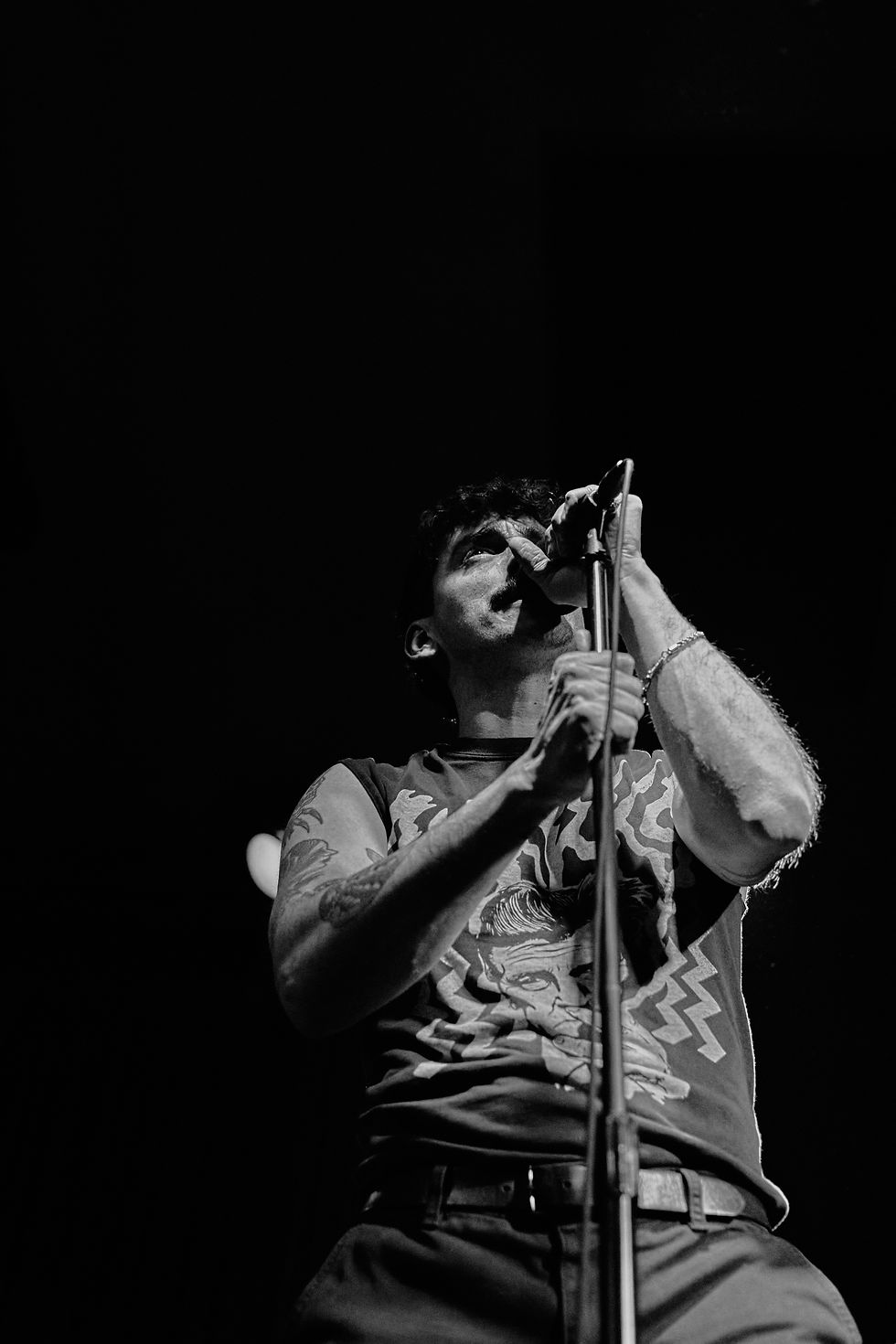
SM: Oh, God. Definitely. And you put that so well: “I tore my skin off and showed people my insides.’ There was a lot of lag in between finishing the record and it finally coming out. And I didn't really write any music in that time. And part of that was because what you're saying. I was just like: ‘Okay, now what the fuck do I write about?’ These were the songs that I just always wanted to write. And these were the things I always wanted to say, but I was always too chicken shit to do it. Well, I’ve finally done that. Now what the fuck do I do? I was definitely a little scared because I felt like ‘Sky Is Blue’ was the best I’m going to do. But I have a new EP that’ll be coming out in a few months, and it’s something I’m very proud of. But yeah, when I began writing again, I did find it a struggle — even just figuring out what I wanted these new songs to be about.
1120: Forget musically for a minute, but in releasing this album that you had inside you for so long and that deals with things you hid about yourself for so long, how did its release change you as a person?
SM: I just feel, in general, lighter in life. I feel so much more confident after releasing this album than I ever have. I mean, I still have all kinds of problems, you know? (laughs) This record wasn’t some miracle drug. But I do feel way more confident — as an artist especially. Just being able to talk to my peers in the music scene, just validating for myself that I can make really good art; and I’m not trying to toot my own horn. But it’s a record I’m very proud of and I feel like that has given me confidence. I've been making music for a long time, but I don't feel like I ever really cracked a nut like I did here. As a parent, this record has changed me a lot, as well.
1120: You and Erin have two little girls, right?
SM: Yeah. Seven- and four-years-old. And it’s funny: My kids got CD players for Christmas, and I gave them both a copy of the record. In my head, I was like, ‘This makes me a little nervous,’ because there’s a song where I'm talking about killing myself on the record. Most of the lyrics are screamed and shouted, so I don't think they can really hear them all. But eventually, that’s a conversation that's going to have to happen. And I am a little nervous about that. But also, it's kind of a gift in a way. It's going to force me to talk about this stuff honestly, and talk about mental health struggles honestly, and talk about sexuality honestly with them. I don't know. Ask me again when they're teenagers and I bring this stuff up. (laughs)
You know, I'll hear them blasting the record in their room, sometimes, and they’ll be running around, and they kind of know the words to ‘You Can't Make Me Dance.’ I’ll hear them singing along, and, wow, what an incredible feeling. Kids have no filter. They have such a pure way of experiencing the world, right? They just know if things are good or bad and what they like, and what they don't like. I mean, kids like The Wiggles, too. But just seeing them put on the record on their own, which is something I’ve never asked them to do — there's a purity to that. There’s a purity to the way kids approach things. And just hearing them sing and to see them dance to it — that’s given me some confidence, too.
1120: In promoting ‘Sky Is Blue,’ you were very open in interviews about hiding your sexuality for so long and the damaging impact that had on you. Did those revelations ignite conversations afterward with people in your life who didn't know about what you were dealing with? And if so, what was it like?
SM: It did happen. Most people have been supportive. You know, when I was in the closet, I was afraid everyone would just think I was so fucking weird and repulsive and that they would never want to be associated with me. So, my really close friends, I was very worried about. I came out to them before the record came out. A lot of my friends were just kind of like, ‘I love you, and I hope I never did anything to make you feel uncomfortable or not supported.’ I remember talking to my friend John — he’s one of my best friends and we were in a bunch of bands together and were college roommates and lived together after college — and I was just like, ‘Man, there were so many times I wanted to tell you, but I just couldn't bring myself to do it.’ To hear him accept me — even though I think, deep down, I always knew he would — it was incredibly healing.
1120: Did you hear from fans and people you didn’t know who might have been going through something similar and, thus, were able to relate to the album?
SM: Oh my God, yeah. That was the other thing that was just amazing. I made a promise that I was going to post on TikTok every day and Instagram in promoting this album and talking about what I was dealing with. I was struck by all these random people who would reach out: a lot of them were queer folks, and trans people, living in places like Arizona or Texas who found the record somehow, or queer punk kids in Italy or wherever. There were a good amount of people who DM’ed me or posted a comment on a video. And then I would sort of comment back to them and just started interacting, developing a social-media relationship as you sometimes do, with people. With some of these folks, I would have some amazing, in-depth conversations about growing up in the church, and hiding your sexuality, and all the things that come with that, and thinking that you're going to hell and how silly all that is.
1120: How did it feel to realize you were helping people know they weren't alone?
SM: Honestly, I feel like it was maybe even more those people letting me know I wasn't alone. It was amazing, really. Like I said before, I still feel a bit awkward taking up space in this community. And so those opinions were honestly the most meaningful and they really impacted me in the deepest ways. To feel like someone understands the art that you're making, there's nothing better than that. There were a couple people who reached out to me and were like: ‘My story is the exact same story: growing up in the church and having this secret.’ And punk music was this light at the end of the tunnel for them, a place where they met all these other weirdos and started to get a little more comfortable with who they were, and it saved them in kind of the same way that I feel it saved me.
1120: When we spoke last year when the album was about to drop, you were talking about how you often had trouble relating personally to the hypermasculinity and aggressiveness associated with hardcore music. But you also said in writing ‘Sky is Blue,’ that the truth you were revealing in the album’s songs actually helped you lean into the genre’s aggressive nature. Given that, has this album changed you at all as a performer? Has that aggressiveness you’ve been able to lean into translated to the stage?
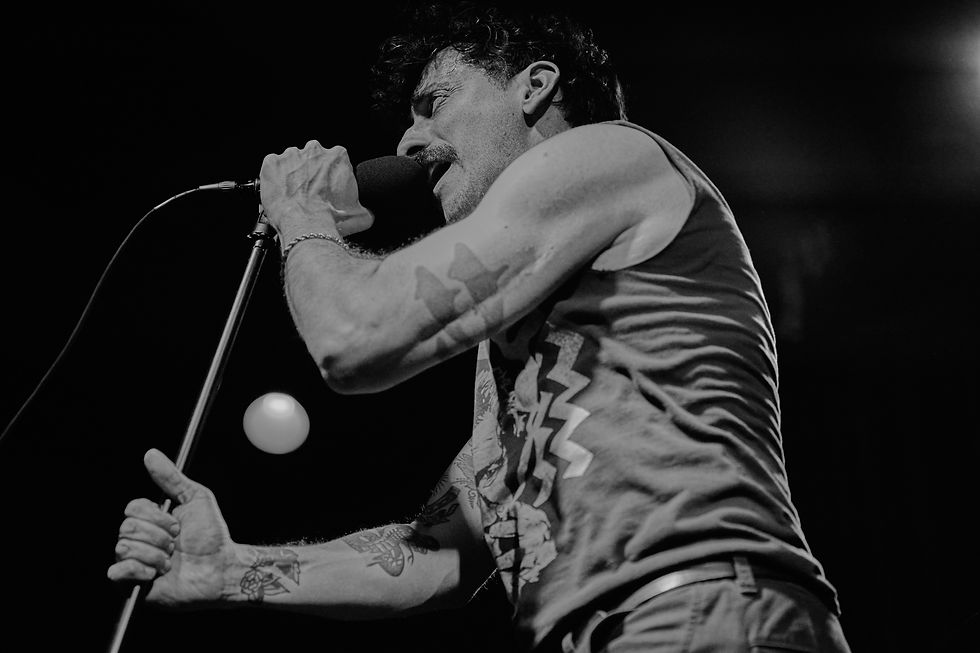
SM: Oh, big time. I feel like I unleashed in a way I never did before. Like, I can do a stupid little dance on stage now, and I don't care if someone thinks it looks gay or whatever. I don't have to worry about that. Whereas I used to constantly be policing myself on stage to make sure that I wasn't doing a certain thing with my body language that would be perceived in a certain way. I've always been terrified of dancing. I hated it because, before, I always felt weird in my body. For the shows after the record came out, I dropped the guitar and it was just me on the mic with a mic stand. And not having a guitar in my hands made me realize, I'm really moving my body in this very fluid way. It's expression. It's not regimented like some choreographed NSYNC song. It’s a good feeling. And you know, it’s exhausting. But it's the best kind of exhaustion, because not only am I spending myself physically but emotionally as well. And I’m a lot less self-conscious about it than I was. It’s been a really wonderful thing to access.
1120: You have a new EP coming out in a few months, which will actually be a split with Hotel Etiquette. Can you talk about that project and how it came about?
SM: It's funny. This kind of just happened on a whim. Mike (Hansen), who plays drums in Gatto Black, is also in Hotel Etiquette and he was doing a four-song EP at Mammoth Recording Studio with John Angelo. I love John Angelo. Anyway, I was in the studio with him, just visiting and hanging out. Mike was due to have his first kid in six weeks or something like that. We we're in the studio with John, and John just kind of mentioned that he was working with several bands and was super booked with the exception of that next weekend. Later that night, I reached out to Mike and said, ‘Hey, would you want to book that time next weekend that John has free to do two songs?’ I told Mike that once he had his baby, I was not going to bother him for a while until he decided he’s ready to jump back in. So, we decided to book the time, and Mike said, ‘Don't do just two songs.’ I knew I probably couldn’t write a full album, but I added a third song and then I decided to do a fourth song, which is an AFI cover. And then Mike said, ‘hey, we should do this as a split.’ That’s something I've always wanted to do, so I was down.
1120: When is it coming out?
SM: It’s going to come out in either January or February. We're not 100 percent sure. We're going to drop the first singles in late October. We're each doing one.
SM: Was it just you two in the studio or did you have a band?
SM: Yeah. It was primarily me and Mike, and then Mike Dagonese plays bass on this record.
1120: So, you're side of the split is titled, ‘Shadow.’ Does that have a meaning, and does it relate back to ‘Sky is Blue,’ in any way?
SM: It does. In fact, even the art for the EP is kind of related to ‘Sky Is Blue.’ You've heard the term ‘shadow work,’ right? It’s your shadow being all the parts of you that you're too scared to embrace or recognize as real. The darker parts of you, essentially. I felt like all this stuff about my sexuality makes up a large part of what I would consider my shadow. Of course, there’s lots of other shit in there too. But in putting out ‘Sky is Blue,’ I had to confront that. That was the beginning of me really doing honest shadow work. Until I could fully see the whole shadow, there was no way I was ever going to be able to really dive into that shit and heal. That's my ultimate goal. I'm trying to like figure my shit out and become a more whole human, who’s more grounded, loving, and patient.
1120: The relationship you’ve built with Mike is amazing. And his drumming has really become such a prominent part of the Gatto Black sound in some way.
SM: Yeah. He's an incredible person. Truly one of the best people I've met in my entire life. I really would consider him one of my best friends in the world. He's such a huge part of our sound. In fact, he's credited as a producer on all the records; he plays such an important part in shaping our songs and what we do in the studio. He’s such a creative force. I can't thank him enough. And honestly, I feel like he's a big part of the reason why anybody in Buffalo gives a shit about me. He has such a great reputation and shows up for people. They say half of life is showing up and Mike is a guy that just puts in the work. I probably wouldn't be doing this project at the level I am if it wasn't for him.
1120: Gatto Black is now around six years old. How are you feeling about the following you've amassed? You've got numbers that most DIY artists would kill for, but at the same time you've expressed to us that you feel like you haven't landed in the psyche of Buffalo hardcore fans.
SM: Yeah, that is true. I'm very happy with all I've been able to build. And quite frankly, I want it to be more. I feel like I pushed the ‘Sky is Blue’ record really hard. And I’m really proud of it. But I feel like I didn't get it in front of everyone that I needed to get it in front of. And not being from Buffalo, I think I'm always going to feel like a little bit of an outsider. There’s a lot of people here who have really fully embraced me, and I have a really strong music community here and a lot of great friends. But I’d like to feel more rooted in the punk and hardcore scene here. I've worked really hard to build friendships and relationships. I do a lot of work for Triple Hammer Records. I've always been a musician, and I've always wanted to feel accepted by a music community, and I think for a long time I was always wondering, ‘Am I good enough? Am I really putting out good enough art to be where I can feel like I can earn the respect of the community?’ I still feel like there's a lot more that I could be doing here in Buffalo.
But again, on the positive side, the people who do know me and who have accepted me are fucking amazing people, and I love those people, and I'm very grateful to have them. And here’s something to consider. We put out ‘Sky is Blue’ in Oct. 2025. And a year before that, in October 2024, we played a couple of shows in Buffalo and there was one show where, I think, maybe seven people attended. And I remember feeling extremely dejected and down at that point. But then, just a little over a year later, we played the Mohawk Place Show in January 2026 and there was like a hundred people at that show. That was such an amazing feeling. And, yeah, I recognize that not all those people were there for us. Del Paxtonwas also on the bill, and they are such a sick band, you know? But it felt great to do that, like maybe I’ve earned my keep here a bit now.
1120: Thank you for speaking with us. Anything else you want to add before we go?
SM: I mean, to continue the Mike Hansen love train, I'm fucking stoked to be doing a split with him. ‘Kiss Me with Your Eyes Closed,’ which is a song on this new EP, might be one of the best songs I've ever written, and I put a weird, like, Italian jazz outro at the end. Piero Umiliani is a huge influence on me. And, that outro is loosely based on one of his compositions. And Sally Schaefer plays violin on it. She’s an incredible musician. So, yeah, I just can't wait for people to hear these songs, and I can’t wait for people to hear Mike’s songs because they're fucking insane. I'm really proud of this new EP and I just can’t wait for people to hear it.


Comments