
‘There Are No Rules’ — A Talk with Musician Jordan Smith

(EDITOR’S NOTE — Growing up in ‘the sticks’ of Western New York’s southern tier, the now urban-dwelling Jordan Smith — the versatile and dauntless artist known for her work with Stress Dolls, Personal Style and the electronic synth duo Urge Surfer — recently got back in touch with nature this summer, going to ‘camp’ along with longtime musical partner Chelsea O. Dubbed ‘Urge Surfer Summer Camp,’ the multi-day writing retreat ultimately resulted in the making of a new Urge Surfer EP titled, ‘Camp Club,’ which dropped at the end of August. Recently, Jordan spoke with 1120 Press about holing up in the woods, her work with Chelsea and Personal Style, her own evolution — both personally and musically — and the impact that a live performance by Every Time I Die had on her as a fledgling young artist.)

1120 PRESS: Thank you for speaking with us! There’s a lot to talk to you about, but let’s start with Urge Surfer, the self-characterized side project you are part of with your Stress Dolls bandmate Chelsea O. Urge Surfer just released a new EP titled, ‘Camp Club,’ and congratulations on the new songs. Tell us about ‘Urge Surfer Summer Camp’ from which the songs were born, and why did you decide to immediately release the two songs rather than put them in the bank, so to speak?
JORDAN SMITH: Thanks so much! So, Urge Surfer Summer Camp came about because I’ve always wanted to set aside some time to devote to writing music collaboratively in a new context — outside of my own home studio or band-practice spaces. I wanted somewhere quiet and surrounded by nature. I live in the city, which I love, but I grew up rurally and most of my family still lives in the sticks, so it always feels good to go touch grass for a bit. Additionally, I’ve made a habit of field recording in the woods in recent years, so I wanted the opportunity to do some audio documentation of wherever we ended up touching down. Chelsea and I picked a little cabin in the woods, packed up her little car with cases of synth gear, her acoustic guitar, a case of mics, the tiniest little mixer/interface and my laptop, and we drove down into the southern tier with nothing written.
The two songs that came to fruition we decided to release within a few weeks after completing them mainly because, why not? I personally like to write with cohesion in mind, and these songs were purposefully structured to melodically mirror one another, but we wrote them with vastly different tonality in mind. They felt like a solid thing that didn’t need to be tethered to other songs. It’s funny, I’m admittedly an album person. If music is not packaged as an album or an EP, I will probably not end up listening to it. I don’t really make playlists. I put on an album and listen to completion. Thankfully, I know other people do like singles. (Laughs)
1120: While Urge Surfer could be considered a Stress Dolls side project, we think of it as a band that really stands on its own. You and Chelsea are pretty active on the Urge Surfer front. Judging by your output, it doesn’t seem any less of a priority. ‘Camp Club’ marks your fourth Urge Surfer record since 2022 — (three EPs and one full-length album.) How would you describe the new EP in the context of the full Urge Surfer catalogue and what are your thoughts on the band’s trajectory/progression over the years?
JS: Urge Surfer really grew out of my early experiments with modular synths and the fact that my personal music practice, as a whole, became a sort of meditative activity that I found grounding in a time of high anxieties. That, and the fact that almost all the composition was done remotely between Chelsea and I, really shaped how (songs) came together. They had a lot of time to marinate as hundreds of emails got passed back and forth.
Over the last year we’ve been experimenting with writing in the same room, live, and it’s really been a lot of fun. But this is a wildly different way of working — patching modular synths from scratch is an inherently slow process. When I’m in my home studio, I relish that fact and treat it more as a means of sonic exploration than song writing; that is, until I stumble on something that really seems substantial. I think of it almost like musical curation. But when Chelsea is present and inspiration strikes, time is of the essence. This presented a new dynamic in which I had to commit to something quickly rather than indulging my sonic curiosities for the benefit of Chelsea’s song-structure-focused writing style. It’s an exciting place to be — prioritizing immediacy.
1120: Just to carry that question a little further, considering your work with Chelsea in not only Urge Surfer but also Stress Dolls, how would you say your relationship/partnership with her, both musically and personally, has evolved over the years?
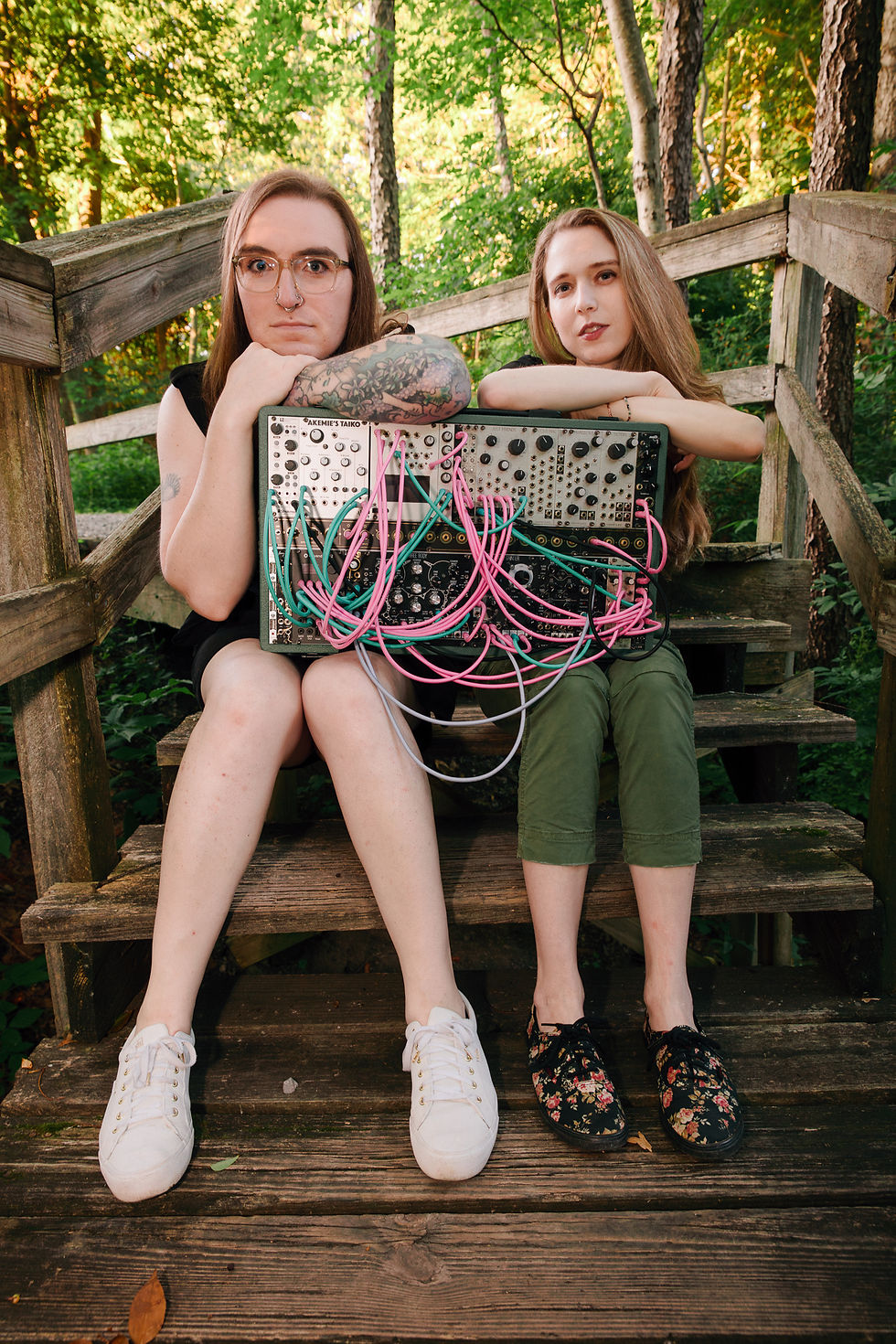
JS: I am so grateful to have Chelsea in my life. From meeting as coworkers at the library, to her asking me to contribute some guitar parts to her Forward EP because she saw me playing online, to now, having released all this Urge Surfer material, as well as having played live with Stress Dolls for well over 50 shows, etc. — we make a solid creative team. We just click.
1120: And just to stay on the Stress Dolls page here; we know Stress Dolls is a Chelsea project, but is there anything happening on that front that fans should look forward to?
JS: It’s not really my place to give details, but I can say that there is a new release nearing completion. As with all Stress Dolls work, Chelsea is really the driving creative force behind it, but with this release, I did write and play a bunch of the lead guitar parts. I’ve heard some of the mixes and I’m excited for folks to hear these songs, whenever they make their way into the world.
1120: So, your work these days isn’t limited to just Urge Surfer and Stress Dolls, you are also in the very well-respected Buffalo punk band, Personal Style — a band you’ve long been a fan of yourself. How did you land in that band, because for some time they operated as a three-piece.
JS: I had become friends with Stephen because my wife and I had made stopping into Gutter Pop Comics part of our weekly routine when it was still on Elmwood near Bidwell. I’m a chatty person, and so is Stephen. It was hard to get us to stop chatting. Later, I met Bryan through mutual friends. A couple years ago I finally managed to track down a bass I’d had my eye out for — an 80s Ibanez Blazer — and I started playing it all the time. I had a bass when I was a teenager, but I’d gotten rid of it when I was in college and was fully immersed in guitar. So, I was just enjoying playing bass again for the first time in a long time. At one point, Stephen had half-jokingly suggested that I replace him as the bass player in Personal Style so that he could play guitar because he hates playing bass (I still don’t believe this at all). I responded with, ‘Honestly, that sounds really fun to me.’ A couple months later, I was on tour with them.
1120: What has been your experience like, so far, playing with Personal Style, and what has struck you about the group now that you’re in it that you didn’t know beforehand?
JS: I had loved the band before joining, so I knew a lot of the songs already. Learning the bass parts came pretty quickly because of that. But not long into playing with them we were already tinkering with new material and jamming out ideas in their practice space. I think what struck me as a new member was how immediately collaborative the unit as a whole felt.
1120: Before joining Personal Style, you were known for your work on guitar with Stress Dolls, and you’re back on guitar in Personal Style after first starting out on bass with them. How did that happen?
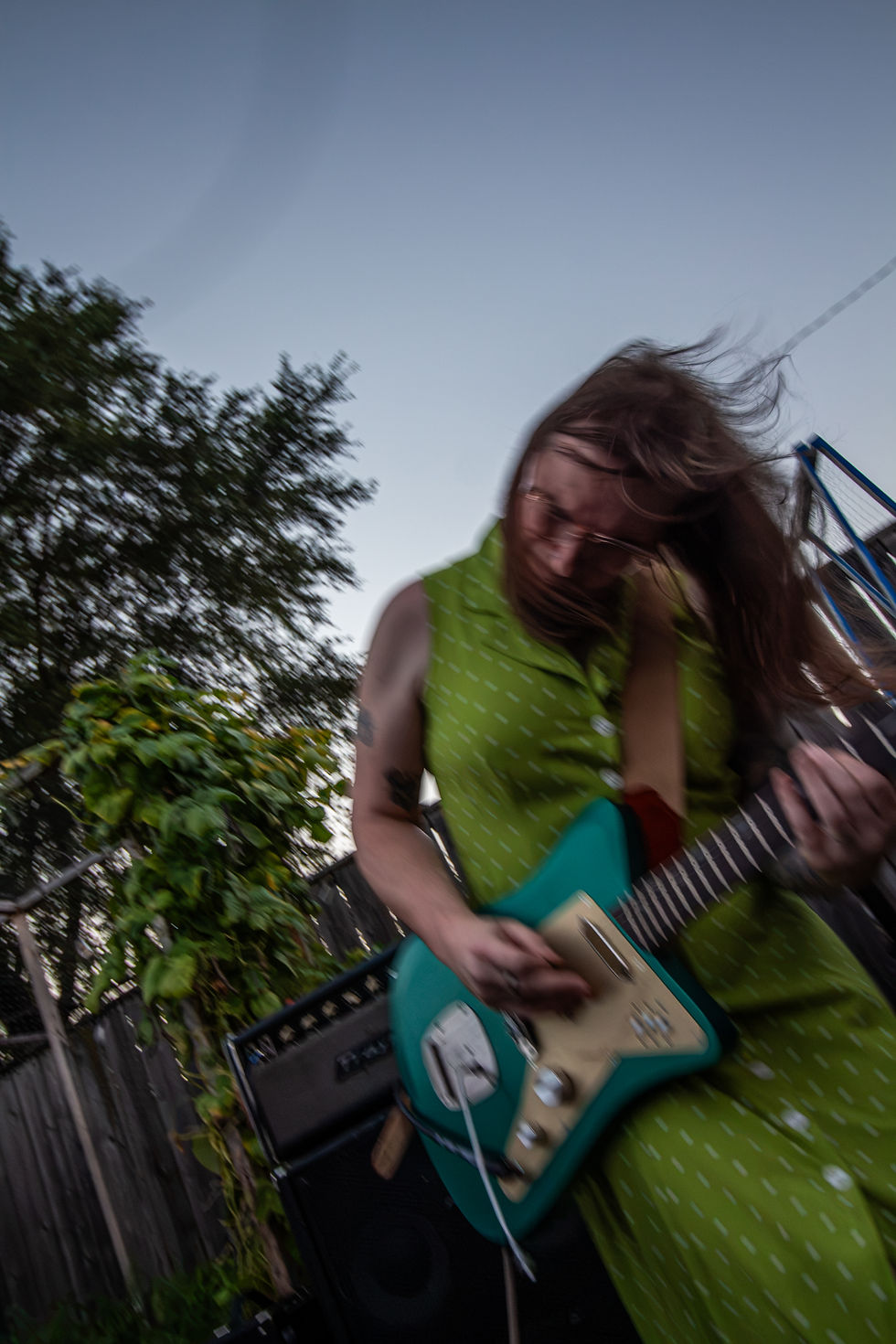
JS: What changed was the fact that Bryan quit the band at the end of spring this year, but we already had a Canadian tour with our friends in Chimes of Bayonets booked for the end of summer. So, we had three options: to quickly decide whether to cancel the tour or play as a three piece, neither of which we wanted to do, or find someone to either be a temp guitar player or a temp bass player. And being that I already knew the songs, it seemed way easier for me to relearn them on guitar, than to bring someone in completely fresh for them to figure out all the parts. It just seemed easier to teach someone the bass parts, rather than the guitar parts. So, we wrangled Evan’s old friend Andrew to fill in on bass for the tour. Three of the songs we played on tour were new, so a couple days after getting back from tour, we went to Mammoth to record them while they were fresh.
We don’t really know what the future holds for Personal Style, but there is likely more than one release in the pipeline. I really like playing bass in this band, but I also have been having a great time playing guitar, so who knows?
1120: You began HRT in February 2022. Having grown up in the small town of Salamanca and experiencing the anxieties and fear (which you’ve mentioned before on social media) about ultimately coming forward with your truth, what do you feel now when you stop and reflect upon your journey?
JS: I’m immensely proud of myself. It’s funny: the idea of pride made intellectual sense to me prior to really reckoning with the fact that I’m a trans woman, but having genuine pride in the fact that this is who I am wasn’t fully understandable until I was on the other side of it. There were essentially no positive examples of how to traverse the process of transition while I was growing up, so it took me a long time to come to terms with it. Transition is a wild, scary process. There was a small window of time where it felt like I might be setting fire to all the stability I had built in my life. But most of my life is the same as before, except now I move through the world and people generally perceive me as a woman and interact with me as such, for better or worse. Words cannot fully capture what this experience has been like, but I will say that I wouldn’t go back for anything.
1120: How do you think being an artist helped you navigate your transition?
JS: Like I said before, I’ve long used musicmaking as a means of meditation. It’s really the only thing I’ve found in life that really quiets my mind. So, in relation to navigating transition, it’s really been a centering force for me to let go of any anxieties that are preoccupying me in the moment, transition included.
1120: And do you think your transition changed you as an artist?
JS: Definitely. Being honest with myself has allowed me to be more honest as an artist. In many ways, transition is really the process of shedding shame. Once that burden is gone, you’re much more free to explore and experiment in ways you would never even have considered before. A lot of Urge Surfer songs are overtly about transition or experiences that have resulted from transition. It honestly kind of opened the floodgates for me in terms of writing prose.
1120: Your musical resume is fascinating to us. Not only does it include your work with Stress Dolls and Personal Style, but your origin also includes hardcore and now with Urge Surfer, you’ve thrown yourself into creating this really interesting synth-driven electronic music. Who were you influenced by growing up?
JS: I definitely think of myself as a musical omnivore. There is interesting stuff to be found in every genre. The first two albums I ever bought myself were No Doubt’s Tragic Kingdom and The Presidents of the United States self-titled record, but I grew up listening to my parents’ LPs: Fleetwood Mac, Deep Purple, Kiss, Billy Joel. A neighbor introduced me to Rage Against the Machine’s Evil Empire when it was released in 1996 and I was instantly obsessed, but I was equally fascinated by the vibrant orchestration of something like Dave Matthews’ Before These Crowded Streets from 1998.
When I first got into guitar I was quickly swept up by pop punk and third-wave emo. In 2002, a friend asked if I wanted to go see Hatebreed. I was 15, knew of the band only via my friend and had never been to a club show before. He drove us to the Showplace Theater, and as it would happen, Every Time I Die was the local opener. Their set singlehandedly shattered all preconceptions about what experiencing live music could be for me. After that, we drove to see bands within a 4-hour radius as frequently as we could afford. Seeing Thursday and Saosin in clubs around that time really changed me. Their ability to seemingly fully give themselves over to performance in an emotionally driven, out-of-body experience sort-of way made me realize that that is an achievable thing to strive for as a performer. And yet, I have memories of walking to my job at McDonald’s during that same time with Destiny’s Child’s The Writing's on the Wall spinning in my Walkman. There are no rules.
1120: How did your interest in the synth develop?
JS: Years prior to any serious interest in synthesizers, I had fallen in love with Björk and records like Telefon Tel Aviv’s Fahrenheit Fair Enough and Thom Yorke’s The Eraser, but I had no idea how these folks made music like that outside of programming with a computer. Time went on and I didn’t think too much about it. My interest in modular synths stems from seeing folks online making ambient music with these strange machines with a million patch cables. I had no real concept of what I was looking at, but I was intrigued.
During the pandemic, I saw Sylvan Esso perform an at-home Tiny Desk session and Nick Sanborn was using similarly mysterious equipment. I decided to investigate and I fell into a deep, deep rabbit hole. I enjoy using a keyboard interface, but I’m not a trained pianist, so find it to be a somewhat restrictive interface to write with. I also don’t enjoy using presets. The eurorack modular synth format allows me to explore composition with whatever interface that feels good to me with whatever modules appeal to me. You essentially build your own instrument based on your own interest in tone, control and aesthetics. And maybe more importantly than any other reason, it’s allowed me to make electronic music without engaging with a computer. I’m staring at screens way too much as it is, so removing them from the process of music making has been incredible for my sanity.
1120: Do you ever stop and think about your personal musical evolution, and how would you characterize it?
JS: I think it just comes down to the idea that you do not know what you like or don’t like until you experience it, and you must expose yourself to all sorts of music to be able to make those distinctions. For a long time, I had this feeling of existential heartbreak about the idea that you might move through your entire life and never actually engage with the art that would most move you, so I’ve really made an effort to explore as much musical ground as I have time for. I don’t have the same voracious appetite that I used to, but these days I’m as likely to put on an Agriculture record as I am a Mary Halvorson album. It’s all about whatever the mood calls for. Just yesterday I put on a new record by a band called Shearling. Someone I know had gone to one of their shows, so figured I’d check it out. Two tracks in and my wife turns to me and asks, ‘What is this? You like this?’ My answer: ‘I don’t know yet!’
1120: Thank you for speaking with us. Before we go, what else might we expect from you in the near future, and is there anything else you want to add that we haven’t touched on?
JS: Thanks for having me! It’s funny, I’ve been obsessed with sludge and post-metal since I first heard Pelican’s March into the Sea EP and Rosetta’s The Galilean Satellites, while I was doing my undergrad. During the pandemic, I designed a guitar rig that would allow me to properly make music in that vein. When I first reached out to Chelsea to collaborate on something other than Stress Dolls, that was actually my initial intention. Obviously, that’s not what played out, but I would still like to have a collaborative project that centers around volume and texture. There is absolutely nothing like standing in front of a wall of amps and feeling the sound in your guts. I really enjoy that.


Comments